|
|
|
|||||||||
|
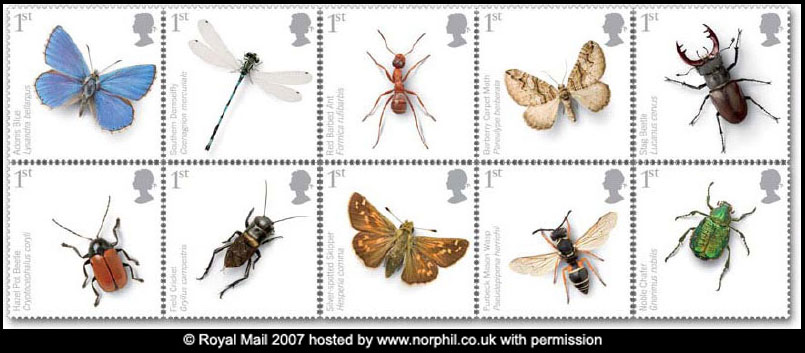
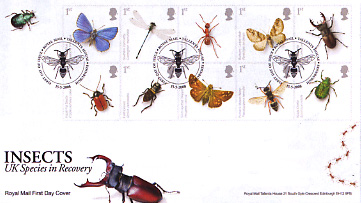
The second in Royal Mail's new nature series, 'Action for Species' concentrates on insects. The series examines UK species that are endangered, but thanks to the efforts of conservation groups and the public, are now on the way to recovery. The issue comprises of ten 1st class stamps in a se-tenant block featuring UK insect species that are endangered. The insects featured were short listed by experts from the Natural History Museum, the Zoological Society of London and British Trust for Conservation and specimens were photographed at the Natural History Museum's studios. Each stamp features a photograph of the insect together with its common and scientific name.
All images are copyright Royal Mail.
Wildlife Trusts and others wishing to use images on websites or in
magazines should contact Royal
Mail's Intellectual
Property Department.
|
|
|
|||||||||
|
Adonis Blue, Lysandra bellargus
A brilliant, sky-blue butterfly, found only on south facing downland
slopes in southern England.
It has declined since the 1950s, partly due to myxomatosis in rabbits,
and inappropriate grazing,
as it needs close-cropped turf, where Horseshoe Vetch the caterpillar's
foodplant grows. Since
the recovery of the rabbit population in the last 20 years, the
butterfly too has made some
recovery. Nationally Scarce
Southern Damselfly, Coenagrion mercuriale
This delicate species resembles several other closely related, far
commoner blue damselflies,
but its habitat requirements are specific. It only occurs near streams
on open heathland and
less often chalk, with a relatively high constant temperature. It is on
the north-western edge
f its range in Europe but the loss of suitable habitat by shading out,
drainage and nutrient
enrichment have contributed to its decline in the past 40 years. Rare
Red-barbed Ant, Formica rufibarbis
Mainly an open heathland species, which nests below ground or beneath
stones. First discovered
just over 100 years ago, this ant has always been regarded as rare but
has declined further as
lowland heaths have been destroyed, it now occurs on just 2 mainland
sites and 1 on the Scilly
Isles. Endangered
Barberry Carpet Moth, Pareulype berberata
The large-scale removal of the larval foodplant, Barberry, once
regarded as an agricultural pest
species, as it harbours wheat-rust fungus, led to a dramatic decline of
this once widespread
moth. In the 1980s it was reduced to just one locality but the
reintroduction of Barberry and of
captive bred moths has reversed the decline. Endangered
Stag Beetle, Lucanus cervus
This is our largest land beetle, which reaches a length of 75mm, but
only the male that has the
impressive stags antlers, the female's jaws being reduced to sharp
pincers. Its larvae live for up to
4 years years, feeding on decaying wood below ground. Gardeners are
encouraged to leave rotting
stumps and branches in the ground, and to be less thorough in tidying
up. Its distribution is
fragmented throughout southern and south-east England, though its
numbers have stabilised. Rare
Hazel Pot Beetle, Cryptocephalus coryli
Restricted to only a few sites in Surrey, Berkshire and Lincolnshire,
this small beetle was once
widespread in southern England. It lives on Hazel and young Birch trees
and its decline is probably
related to the reduction of Hazel coppicing in the south, and the
removal of Birch from heathland in
Lincolnshire. Endangered
Field Cricket, Gryllus campestris
Never a common insect in Britain, the Field Cricket has declined
through loss of habitat and now
only occurs naturally in one population in West Sussex. Found on light
sandy soil on sunny,
south facing slopes, males proclaim their territories by making a
penetrating chirrup at the
entrance of their burrows. A captive breeding and release partnership
between Natural England
and the London Zoo has resulted in the establishment of several more
colonies in southern
England. Endangered
Silver-spotted Skipper, Hesperia comma
This butterfly thrives on close-cropped, south facing, chalk downland,
but in the past 50 years
these habitats and the butterfly have declined drastically. The lack of
grazing and myxomatosis
in rabbits has also resulted in too deep a sward, which affects
breeding success, however,
management of many sites and the recovery of rabbits in the last 20
years has led to some
re-expansion. Rare
Purbeck Mason Wasp, Pseudepipona herrichii
This small, attractive wasp is now restricted to just 7 heathland sites
in Dorset, which are
fortunately all in, or close to, Sites of Special Scientific Interest
(SSSIs). The female makes her
nest in a hole below ground, which she provisions with Tortricoid moth
caterpillars for her larvae
to feed on. Areas of bare clay soil amongst the heather, where the wasp
can burrow, are
essential for breeding, and the management of suitable sites is now
being undertaken to prevent
the shading-out of suitable heathland. Vulnerable
Noble Chafer, Gnorimus nobilis
A beautiful metallic green beetle, related and similar to the Rose
Chafer, most likely to be seen
on warm summer days on the flowers of various umbellifers. It occurs in
old orchards and open
woodland where the larvae live for up to two years, in the decaying
branches, mainly of old fruit
trees. Due to the removal of old orchards, it has declined seriously
and is now found only in
parts of central and western England and the New Forest. Vulnerable
 Technical
details: The 35mm square
stamps are designed by Andrew Ross using photography from the Natural
History Museum. In sheets of 30/60 they are printed in lithography by
De La Rue Security Print, perf 14½.
Technical
details: The 35mm square
stamps are designed by Andrew Ross using photography from the Natural
History Museum. In sheets of 30/60 they are printed in lithography by
De La Rue Security Print, perf 14½.
The stamp and postmark images are Copyright 2007/8 by Royal Mail.
Products issued:
Mint
Presentation Pack
Royal Mail fdc
Set of 10 Stamp Cards unused -
Special Postmarks
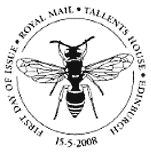
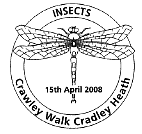
Postmarks available for the day of issue will be shown below here;
these may not be to scale. These postmarks cannot be obtained to
order after 15 April.
|

|
 Image awaited - similar
to this
Image awaited - similar
to this |
|

|
| Ref FD811 Official Philatelic Bureau FDI. |
Ref FD812 Official Crawley FDI postmark. |
Ref FD812NP Official Crawley non-pictorial FDI postmark |
Ref M10937 Insects, Crawley Walk, Cradley Heath |
Ref N10939 Endangered Insects, Sheffield |
|
|
 |
|
|
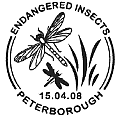
| Ref M10934 Endangered Insects, Peterborough. |
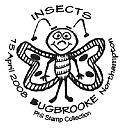
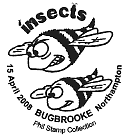
Ref M10935 Insects, Bugbrooke, Northampton. |
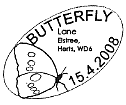
Ref L10931 Butterfly Lane, Elstree, Herts |
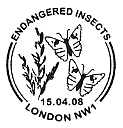
Ref L10929 Endangered Insects, London NW1 |
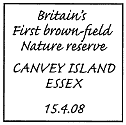
Ref L10932 Britain's First brown-field Nature reserve, Canvey Island |
|
|
 |
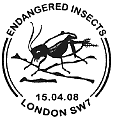
Postmark notes: L10928 - SW7 - Natural History Museum; L10929 - NW1 - London Zoo; S10939 - Sheffield - HQ of Natural England; L10932 - Canvey - RSPB Canvey; |
|
| Ref L10928 Endangered Insects, London SW7. |
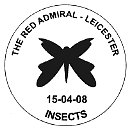
Ref M10938 The Red Adminral, Liecester. |
Ref M10936 Insects, Bugbrooke, Northampton. |
||
If you would like to be contacted when this page is updated
please use the ChangeDetection panel alongside the stamp
image or email
us.
NB: emails will usually be acknowledged in 1-2 days.
If you do not receive an acknowledgement please email us from a
different address (eg hotmail, gmail).
This page updated 1 April 2008